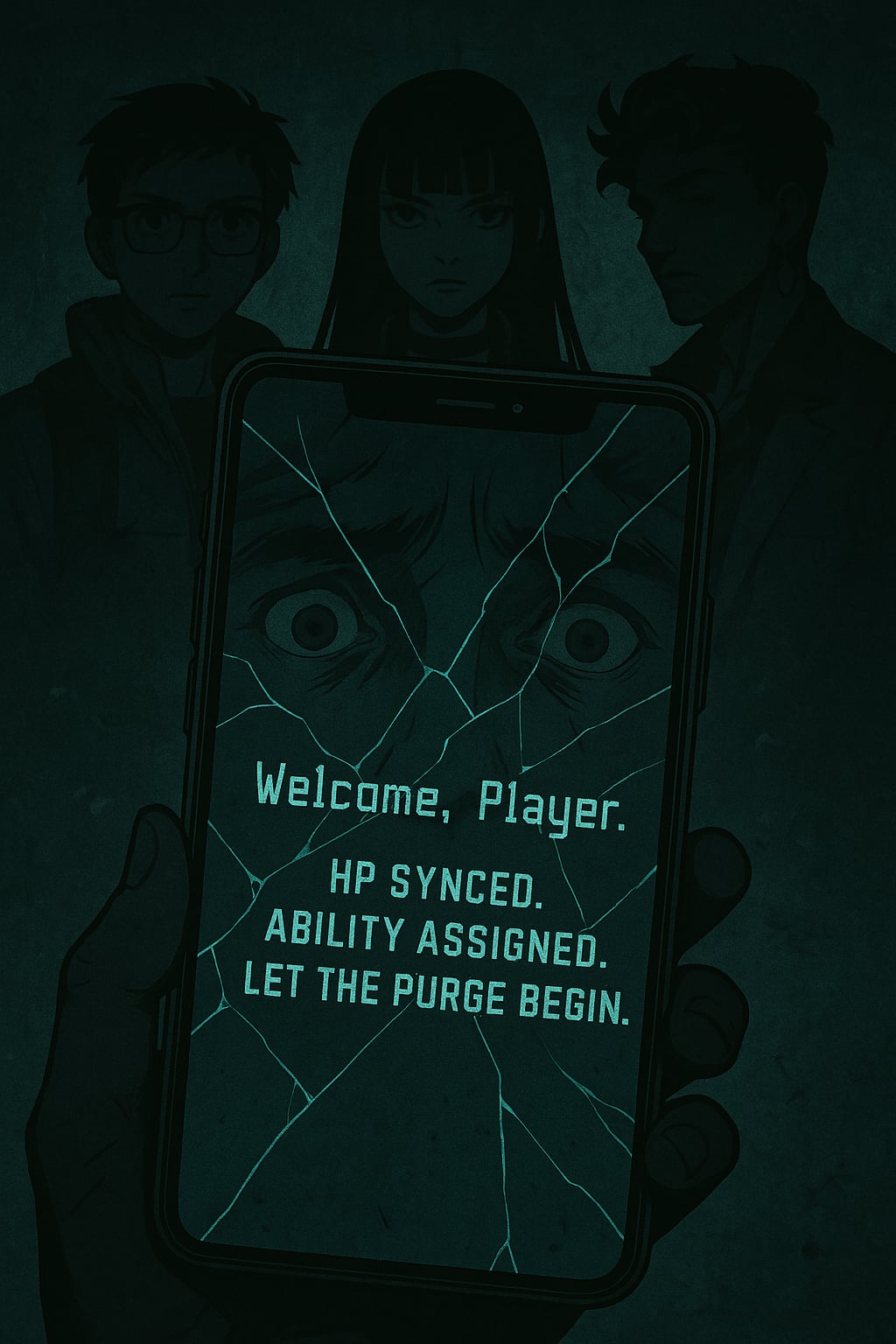
In the year 2029, a mobile game named Deadlink appeared on every smartphone across the globe. No one downloaded it. No one remembered installing it. Yet, when it opened, it opened for everyone.
“Welcome, Player. HP synced. Ability assigned. Let the purge begin.”
Each person was assigned a unique power, tethered to their psyche, desires, or hidden fears. Alongside it appeared an HP bar on their phone screen—real-time, constant, inescapable.
What players learned too late was this:
When your HP hits zero in the game, your real body dies. Permanently.
Gerbert Maddox, 30, a quiet engineering student obsessed with systems and mechanics, was among the first to truly use the game.
Deadlink gave him the ability: Manifest — the power to summon anything he understood fully. Firearms, siege engines, surveillance tech. If he knew how it worked, he could create it.
In his first moment of combat, Gerbert conjured a medieval trebuchet on a crumbling city overpass. A firebomb soared across the skyline, eliminating five players. The horror of it left him shaken.
But the game demanded blood, not hesitation.
Movement, conjuring, even hiding cost HP. Rest was rare. Combat was constant.
Rann, 29, a goth girl hardened by a broken home, found solace in solitude. Her ability: Phase — the power to slip into and through solid matter. Walls, floors, even steel.
But phasing didn’t cost HP—it cost stamina. Each phase built exhaustion. And if she pushed too far, she risked glitching into the void between spaces.
Her strategy was stealth and precision. She became a whisper in the battlefield, a ghostly assassin.
Ace, also 29, was flamboyant and unpredictable. Every step he took bloomed flowers. His gift: Verdant Dominion — the power to manipulate plant life. He turned nature into a weapon.
Thorny vines impaled enemies. Razor-sharp petals danced like blades. Blossoms exploded in clouds of psychedelic pollen. Where Ace walked, the battlefield became a garden of chaos and death.
The world fractured. Cities crumbled into arenas. Forests twisted into labyrinths. Beaches became death traps. Survivors became killers. Killers became legends.
In the ruins of a mall during the game’s midpoint, Gerbert, Rann, and Ace collided.
Gerbert conjured a drone turret, raining bullets across a shattered food court.
Rann phased through a broken escalator, slipping behind him.
Ace erupted the ground in roots and sunflower mines that sprayed venom clouds.
They clashed—deadly, focused, bloodied.
But in the heart of the chaos, none of them wanted to win. Not like this.
Temporary alliances sparked in the fire. Could they find a way to break the game’s cycle? Or were they doomed to kill until only one heartbeat remained?
Because Deadlink didn’t just watch.
It adapted. It judged. It fed.
And it was always watching.